Florida Car Accidents: What to Do in the First 24 Hours
Car accidents can be shocking, stressful, and overwhelming. In Florida, the first 24 hours after a crash are especially important for your health, safety, and legal rights. Knowing what to do can help you avoid common mistakes and protect your ability to pursue compensation.
At Daniel Sagiv Law Group, P.A., we help accident victims in Boca Raton and throughout Florida navigate the aftermath of serious crashes. Here are 12 important steps to take.
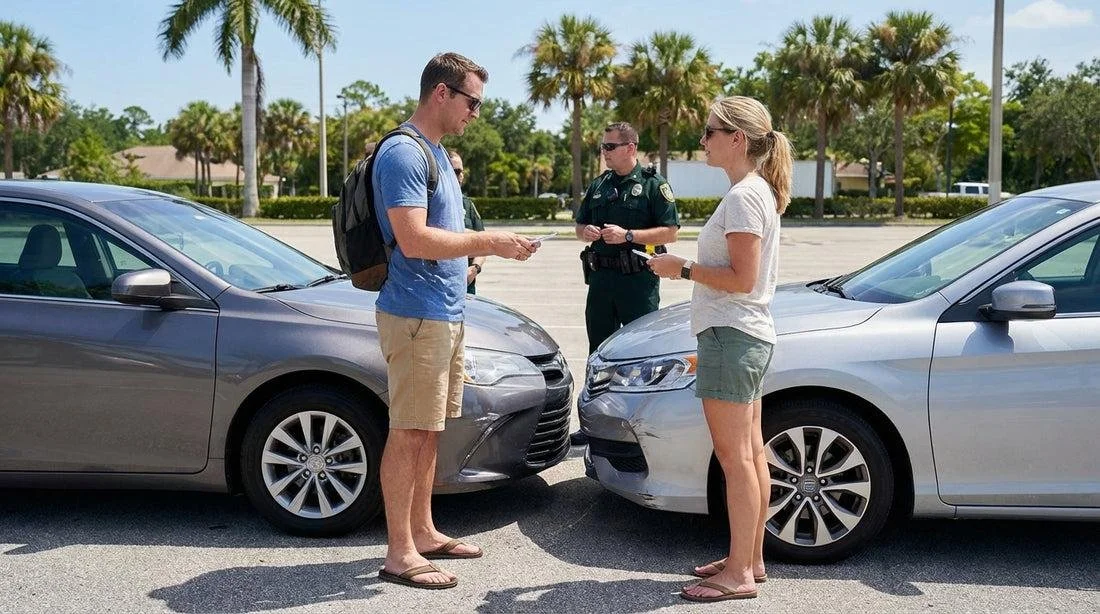
Step 1: Prioritize Safety First
Check yourself and your passengers for injuries. If anyone is seriously hurt, call 911 immediately. If your vehicle can be moved safely, get out of traffic and away from additional danger.
Do not attempt to move someone with a potentially serious injury unless leaving them in place presents an immediate danger.
Step 2: Call Emergency Services
Report the accident to law enforcement when required and request medical assistance if anyone may be injured.
A crash report can provide important documentation, including the parties involved, vehicle information, witness details, and the responding officer's observations.
Even when injuries initially appear minor, don't assume medical attention is unnecessary.
Step 3: Exchange Information Carefully
Collect the other driver's name, contact information, driver's license details, license plate number, and insurance information.
If multiple vehicles are involved, document the information for each driver. Avoid arguing about fault or making assumptions about what caused the accident.
If another driver refuses to cooperate, allow law enforcement to handle the situation.
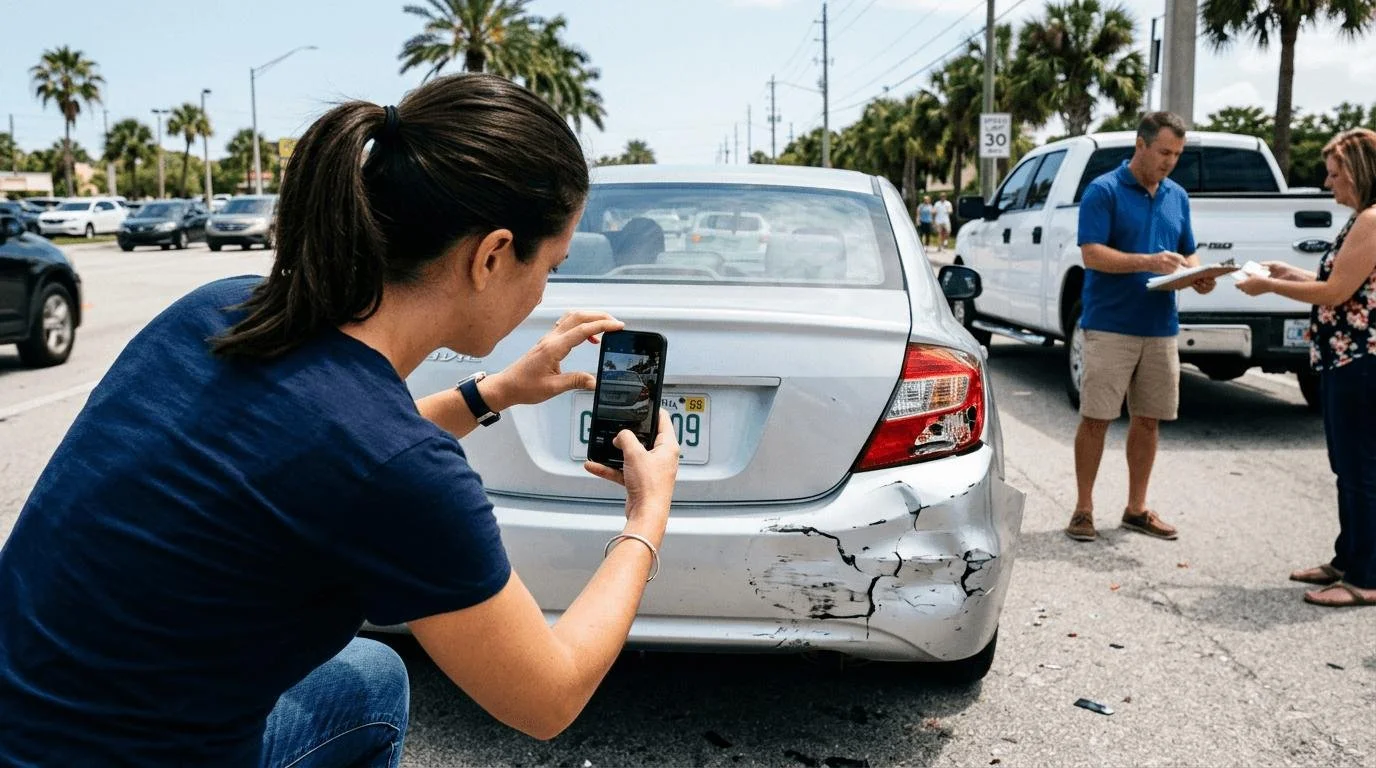
Step 4: Document the Scene Thoroughly
If you can do so safely, photograph:
Vehicle damage and vehicle positions
Road conditions, intersections, and traffic signals
Skid marks, debris, and other physical evidence
Visible injuries
License plates and nearby landmarks
Ask witnesses for their names and contact information. Their observations may become important if the drivers disagree about what happened.
Step 5: Avoid Admitting Fault
Florida generally follows a modified comparative negligence system. In many negligence cases, compensation can be reduced according to a person's percentage of fault, and being more than 50% responsible may prevent recovery of damages.
Because fault can be disputed, avoid making statements that speculate about responsibility.
When speaking with police, witnesses, or other drivers, provide accurate facts about what happened without guessing or accepting blame.
Step 6: Seek Prompt Medical Attention
Some accident-related injuries, including concussions, soft-tissue injuries, and certain internal injuries, may not produce obvious symptoms immediately.
Seek appropriate medical evaluation promptly, particularly if you experience pain, dizziness, headaches, confusion, or other concerning symptoms.
Under Florida's Personal Injury Protection (PIP) rules, receiving qualifying initial medical services within 14 days is generally necessary to access PIP medical benefits. Certain additional requirements and coverage limitations apply.
Prompt medical care is important for your well-being and can also establish documentation connecting your injuries to the accident.
Step 7: Notify Your Insurance Company
Report the accident to your insurer promptly and follow the notice requirements of your policy.
Provide accurate information about the collision, but avoid speculating about fault, the seriousness of your injuries, or how long recovery may take.
Keep records of your communications, claim numbers, and any documents you submit.
Step 8: Be Cautious With Insurance Adjusters
An insurance adjuster may contact you shortly after the accident to ask questions about the crash, your injuries, or your medical treatment.
Be careful about providing estimates, agreeing to a settlement, or making recorded statements before understanding your rights and obligations.
You may wish to speak with an attorney before giving a recorded statement to another driver's insurance company or signing a release.
Step 9: Obtain a Copy of the Crash Report
Once available, obtain a copy of the official crash report and review it for accuracy.
The report may include driver and insurance information, witness statements, diagrams, and the responding officer's observations.
Keep it with your other accident-related records so it is available when needed for an insurance claim or legal consultation.
Step 10: Monitor Your Symptoms Closely
Some injuries become more noticeable hours or days after a collision.
Pay attention to changes in pain, mobility, headaches, dizziness, numbness, or other symptoms. Follow your healthcare provider's recommendations and report new or worsening symptoms.
Keep a record of medical appointments, treatments, and how your injuries affect your daily activities.
Step 11: Preserve All Evidence
Keep copies of everything related to the accident, including:
Medical records and bills
Vehicle repair estimates
Towing and rental car receipts
Photographs and videos
Insurance correspondence
Documentation of missed work or lost income
Avoid discarding damaged personal belongings or other potentially relevant evidence before determining whether it may be needed.
These records can help establish the financial and personal impact of the collision.
Step 12: Understand Florida's Legal Deadlines
For many Florida negligence-based personal injury claims arising on or after March 24, 2023, the general deadline to file a lawsuit is two years. Different deadlines or special rules may apply depending on the circumstances.
Waiting too long can make it harder to preserve evidence, locate witnesses, or pursue compensation.
Consulting an attorney early can help you understand which deadlines apply to your particular case.
Why Legal Guidance Matters After a Car Accident
The decisions made immediately after an accident can affect an insurance claim and any subsequent legal action.
An attorney can help investigate the collision, preserve evidence, evaluate available insurance coverage, communicate with insurers, and assess the damages resulting from your injuries.
If you've been injured in a collision, learn more about how our Boca Raton car accident attorneys help clients pursue compensation after serious crashes.

Quick Checklist: What to Do Right Away
Move to safety and call 911 when necessary
Seek appropriate medical attention
Exchange driver and insurance information
Photograph the accident scene
Collect witness contact information
Avoid speculating about fault
Notify your insurance company
Preserve medical records, receipts, and other evidence
Keep track of symptoms and follow-up care
Consider speaking with an attorney before accepting a settlement
Final Thoughts
The first 24 hours after a Florida car accident can be confusing, but taking the right steps can help protect your health and legal interests.
At Daniel Sagiv Law Group, P.A., we provide personalized representation to people injured in accidents throughout Florida. Daniel remains directly involved in his clients' cases, helping them understand their options and navigate the legal process.
Whether your accident involves a passenger vehicle, commercial truck, or rideshare driver, our team can help you evaluate your next steps. Explore our personal injury practice areas to learn more.
Injured in a Florida car accident? Call (561) 569-1387 to discuss your situation with Daniel Sagiv Law Group.